DevOps, Cloud & Cybersecurity

Practical guides for building, operating, and securing your infrastructure.

Blog Posts

AI-powered cloud computing infrastructure visualizing connected data nodes, cloud servers, and real-time digital data processing

Multi-Cloud Strategy: Building a Winning Cloud Strategy for 2026 and Beyond

Enterprise technology leaders have spent the last decade racing to the cloud. The new race is subtler: shaping a multi cloud strategy that keeps costs predictable, avoids vendor lock-in, and still lets teams tap the newest services across providers. How do you mature from “lift-and-shift” to a modular cloud ecosystem built for the next decade?

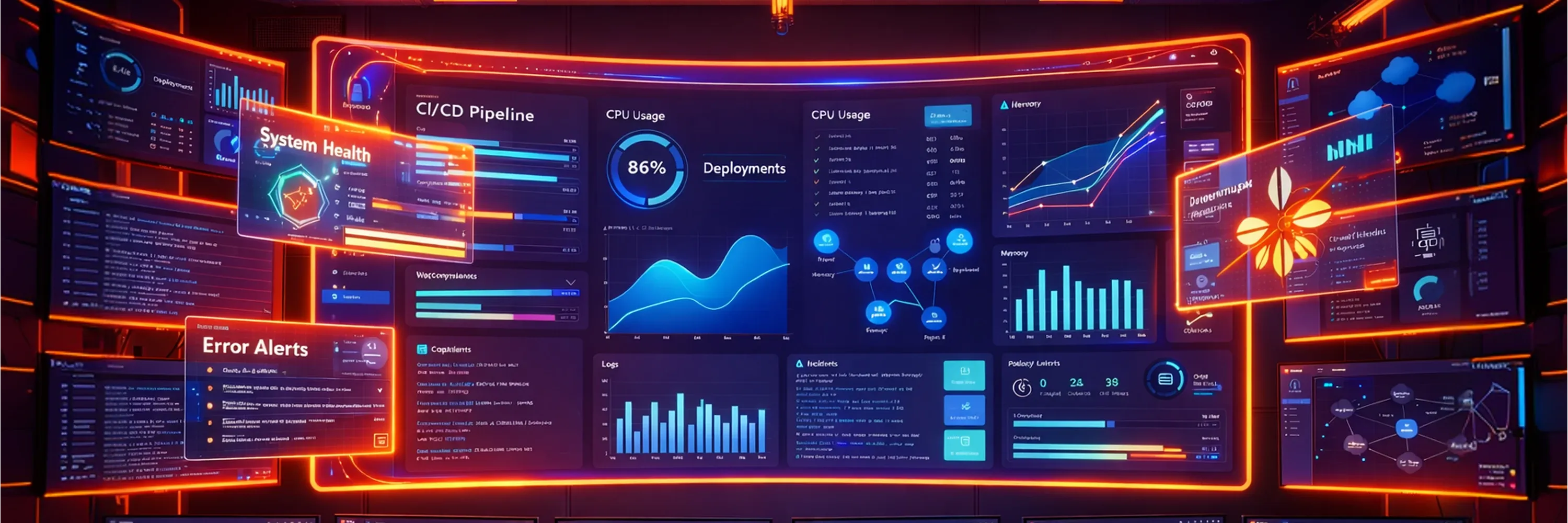
Advanced AI data analytics dashboard displaying system health, CI/CD pipeline metrics, CPU usage, and real-time performance monitoring

CI/CD Monitoring for Cloud and DevOps Teams: Performance, Security, and Compliance in Production

Deploying code is only half the challenge in modern software engineering. Teams must also understand how that code performs, how secure it is, and whether it complies with regional regulations once in production. Without this visibility, organizations are essentially operating blind. This article explains how CI/CD monitoring turns raw operational data into actionable intelligence. It explores deep observability across performance, security, and compliance, how monitoring integrates into the development pipeline, why alert fatigue matters, and how priorities differ by region - from FinOps in North America to data sovereignty in the GCC.

AI-powered data center with network engineer managing real-time data processing and high-speed server infrastructure with glowing data streams

Infrastructure as Code (IaC): How Infrastructure as Code Automates Cloud Deployments

Modern cloud estates grow and mutate daily. Manual clicks in a console cannot keep up, budgets spiral, and outages last longer than they need to. Infrastructure as Code (IaC) promises to break that cycle by turning infrastructure into version-controlled, testable, repeatable code. Below is a clear, end-to-end guide for cloud architects, platform engineers, DevOps and SRE leads, and CTOs who want to move from isolated scripts to an AI-assisted, self-healing cloud platform.

Abstract real-time data stream visualization with high-speed digital network, big data processing, and glowing code in futuristic technology tunnel

Container Orchestration Tools for App Deployment

Container orchestration is the control layer that schedules workloads, replaces failed instances, manages configuration, exposes services, and coordinates releases across a cluster or managed platform. Choosing a tool is less about the longest feature list and more about the control your workloads require and the operational responsibility your team can sustain.

Start with the deployment model. A managed Kubernetes service reduces control-plane work but still leaves significant platform responsibility. A higher-level container service can remove more operations at the cost of portability or control. A self-managed orchestrator offers flexibility, but your team owns upgrades, reliability, security, and capacity.

Kubernetes is an orchestration system for managing containerized workloads and services; it is not the tool that builds the application image. Its core workload controllers manage Pods and provide rollout, scaling, and recovery behavior. Use the Kubernetes concepts documentation and workload-management documentation as the source of record for Kubernetes capabilities.

Containerization itself acts like a standardized shipping box for software, wrapping the code and all its necessary files into a single lightweight package (like a Docker container) so it runs reliably on any computer. Orchestration is the automated traffic control system (like Kubernetes) that manages these boxes — scheduling where they go, restarting them if they crash, and scaling the number of boxes up or down based on customer demand.

Futuristic data center corridor with glowing code interfaces and cybersecurity analytics dashboards displayed on server panels

How to Optimize Cloud Costs Without Compromising Performance or Quality

Cloud spending has become one of the largest cost drivers for technology companies, often growing faster than revenue. Optimizing cloud usage is no longer optional - organizations must ensure every dollar delivers measurable business value without sacrificing performance or engineering speed. This guide outlines a strategic three-phase framework for 2026, covering immediate waste reduction, automated efficiency, and architectural modernization built on unit economics.

Server corridor with illuminated network panels and monitoring dashboards

What Is Cloud Infrastructure? A Beginner’s Guide to Cloud Computing

Modern businesses no longer need to fill basement rooms with humming servers and tangled cables to run their applications. Instead, they rely on virtual resources accessed over the internet, a shift that has fundamentally changed how companies operate and grow.

A futuristic DevSecOps cybersecurity concept visualizes secure software development with digital shields, data streams, and integrated security workflows.

DevSecOps Explained: How to Build Security into Every Stage of Development

Software moves quickly, yet attackers move even faster. The longer a vulnerability stays hidden in code, the more expensive it becomes to fix, and the greater the damage to customer trust. The solution is DevSecOps: weaving security into the entire delivery pipeline instead of bolting it on at the end. The rest of this article shows engineering leaders and security professionals exactly how to make that shift left without slowing release velocity.

A futuristic data operations center visualizes interconnected digital systems, analytics dashboards, and real-time network intelligence in a high-tech workspace

Cloud Cost Optimization: How to Cut Costs and Improve Cloud Performance

Worldwide spending on public cloud reached $723.4 billion in 2025, yet 84% of companies say keeping that bill under control is their biggest headache. This guide shows how engineering and FinOps teams can move from merely spending less to spending smart - without throttling innovation.

A business team collaborates in a modern office surrounded by AI-driven data analytics dashboards, visualizing real-time performance metrics at sunset

How to Build a CI/CD Pipeline from Scratch: A Step-by-Step Guide

Modern teams cannot wait for weekly releases, and neither can their users. A well-designed ci/cd pipeline lets every commit race from laptop to production with confidence, catching bugs long before customers see them. Below is a clear, tool-agnostic roadmap you can apply today, even if this is your first attempt at automation.

A futuristic neon-lit digital tunnel represents advanced AI infrastructure, high-performance computing, and data center technology

What Does a DevOps Specialist Do? Roles, Skills, and Responsibilities Explained

Dev & Ops used to sit in separate corners of IT, but organisations now realise that rapid software delivery depends on tight collaboration. That shift has created a new role: the devops specialist. Yet job ads rarely spell out what the title really means, which tools matter, or how it differs from traditional system administration. This article gives recruiters, career changers, students, and IT professionals a clear, authoritative look at the day-to-day life, skills, and responsibilities of a DevOps specialist.

Two professionals walking through a futuristic digital data environment symbolizing human and AI collaboration in advanced data infrastructure and decision-making

Why You Need a Dedicated DevOps Team and the Right devops automation tools for Cloud Projects

Modern software teams race to ship features, patch vulnerabilities, and lower cloud bills all at once. Many discover that shortcuts in tooling or team structure only amplify outages, overspending, and burnout. This article explains why pairing a dedicated DevOps culture with carefully chosen devops automation tools is the surest path to sustainable speed in AWS, Azure, or Google Cloud environments.

A clear narrative runs through every section: tools matter, but culture, expertise, and continuous improvement matter more. By the end, you will understand the interplay between people and automation, see how specialized DevOps roles protect velocity and budget, and learn how to select a toolchain that scales with your business—not against it.

A futuristic illustration of an infinity loop symbolizing AI-driven DevOps, continuous integration, and continuous deployment through interconnected digital systems

CI/CD Automation: How CI/CD Pipeline Automation Powers Modern Software Delivery

Software delivery has become a race against the clock, yet moving too fast often breaks things. Teams face constant pressure to release features instantly, but manual processes create bottlenecks that slow down progress and introduce errors. This tension between speed and stability is the core challenge for modern IT leaders.

This article explores howci cd automationserves as the critical engine for solving this dilemma. You will learn how automating your pipeline transforms software delivery from a risky, manual chore into a reliable, high-speed process. We will examine the financial impact of poor quality, the mechanics of automated testing, and the strategic value of streamlining your release process to drive better business outcomes.