DevOps, Cloud & Cybersecurity

Practical guides for building, operating, and securing your infrastructure.

Blog Posts

Close-up of a futuristic high-performance processor chip with glowing data pathways and illuminated circuitry representing advanced computing, AI processing, and next-generation semiconductor technology

DevSecOps in Action: Building Security into Every Line of Code

DevSecOps is the operating model that builds security checks and policy enforcement into every stage of the software delivery pipeline, with monitoring handled as part of the same release process. It makes security a shared responsibility across development and operations, supported by automation inside CI/CD so teams ship faster with lower exposure and remediation cost.

Futuristic cloud automation dashboard displaying connected data pipelines, workflow orchestration, analytics monitoring, and system integrations within a server infrastructure environment

Inside the DevOps & Platform Engineering Role : Bridging People and Platforms

A DevOps specialist is the engineer who connects development and operations to business delivery through automation, pipelines, observability, and cloud platform discipline. The role exists to standardize how software ships and reduce friction between teams so complex environments become predictable. Done well, it produces measurable gains in deployment speed and uptime as operational maturity rises.

Title:
Cloud Infrastructure Management KPIs for CTOs and IT Directors

Meta description:
This Explainer shows you how to set cloud KPIs with owners and thresholds so you can make monthly decisions.

A

Cloud Infrastructure Management KPIs for CTOs and IT Directors

A useful cloud KPI report shows service health and resilience. It also shows security exposure and capacity, along with change performance and cost. Each indicator needs a threshold and an owner who carries a defined corrective action. Everything else belongs in engineering tooling. The report exists to produce decisions each month.

Futuristic CI/CD pipeline visualization in a glowing server environment showing commit, build, test, deploy, and monitoring stages with high-speed data streams flowing through illuminated gateways

How to Speed Up a CI/CD Pipeline Safely

Setting up a CI/CD pipeline is straightforward. Building one that still works when your codebase has tripled, and three more teams are shipping through it - that is a different problem entirely.

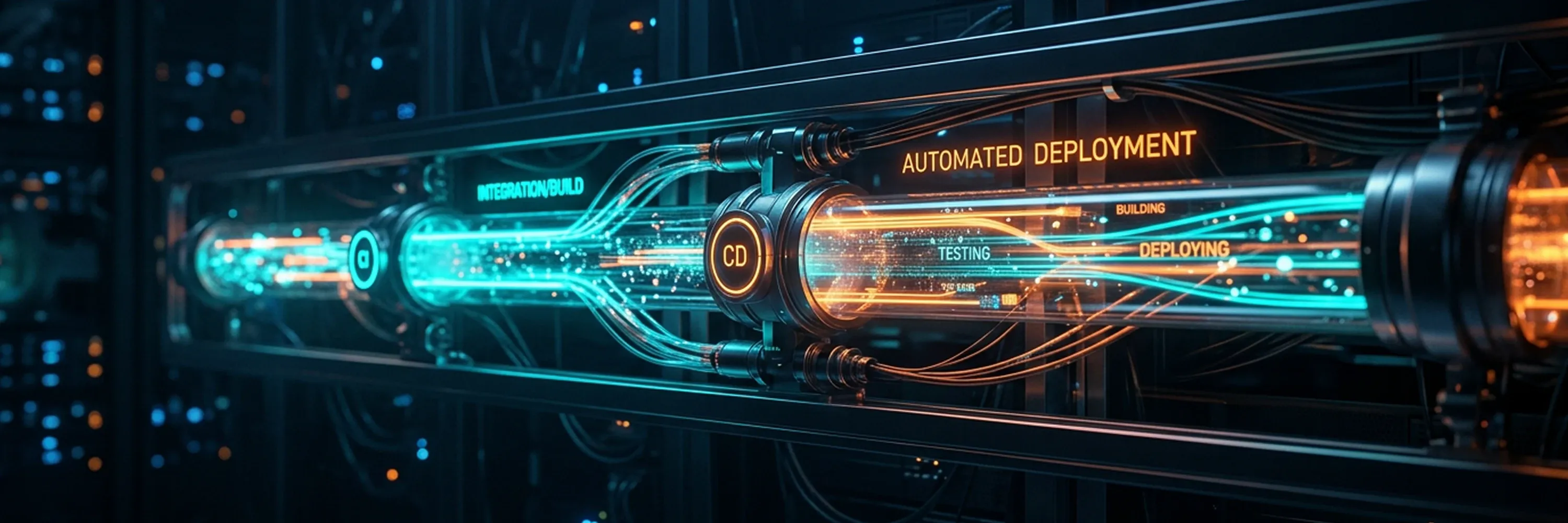
Futuristic visualization of an automated CI/CD deployment pipeline with glowing data streams, integration, testing, and deployment stages

Automate or Fall Behind: The Case for CI/CD Pipeline Automation

Software teams are shipping more code, to more environments, under more pressure than ever before. Yet many organizations still rely on manual steps, handoffs, and scripts held together by tribal knowledge to push releases into production. The question is no longer whether to automate CI/CD pipelines. It is why automate CI/CD pipelines now, before the cost of waiting gets any higher.

Glowing blue and orange digital data streams flowing through a futuristic network infrastructure environment

DevOps-as-a-Service: Streamlining IT Operations for the Cloud Era

Most organizations know they need DevOps. Fewer have the internal talent, tooling maturity, or operational bandwidth to build and sustain it on their own. That gap between ambition and execution is exactly where DevOps-as-a-Service (DaaS) enters the picture.

Futuristic DevOps system visualizing automated data flow through an integrated software pipeline

Building a High-Performance System DevOps Framework

What makes a great system DevOps design? It’s a question that comes up in every engineering leadership discussion, yet the answer rarely comes down to better tools or faster pipelines. Most organizations treat DevOps as a set of tools. High-performing teams treat it as a system design discipline, where architecture, automation, monitoring, and continuous improvement work as one operating model. Get it right, and you enable speed, stability, and scale. Get it wrong, and you accumulate technical debt that no tool can fix.

Visualization of a DevOps CI/CD pipeline showing build, test, and deploy stages with directional data flow

DevOps Solutions: The Innovation Engine of Modern Tech

Great ideas alone don't create competitive advantage. The ability to move those ideas from concept to production, quickly and reliably, is what separates organizations that innovate from those that simply plan to.

visualization of data flowing through layered digital system architecture with arrows and analytics interfaces

Why CFOs Love Managed IT Services

Technology spending has become one of the fastest-growing line items on corporate budgets, yet most CFOs still struggle to connect those costs to measurable business outcomes. The question is no longer whether to invest in IT, but how to structure that investment so it delivers predictable returns without constant financial surprises.

modern data center with glowing network connections and cloud computing infrastructure visualization

Cloud Support After Migration: The Often-Ignored Success Factor

Finishing a cloud migration often feels like a major milestone—but it’s not the end of the journey. It marks a transition into a new phase where maintaining performance, controlling costs, and ensuring security become ongoing priorities. The real challenge isn’t getting to the cloud; it’s operating effectively once you’re there.

futuristic data infrastructure showing CI/CD pipelines streaming data through a secure processing hub with cybersecurity shields and real-time analytics dashboards

Speed vs. Security: Finding Balance in Cloud Environments

Releases are fast. But misconfigurations are accumulating, drift is going undetected, IAM policies are inconsistent, and fragmented visibility is leaving gaps that attackers know how to find. For most cloud teams, the problem is not that they are moving too fast. It is that security was never built into the path they are moving along.

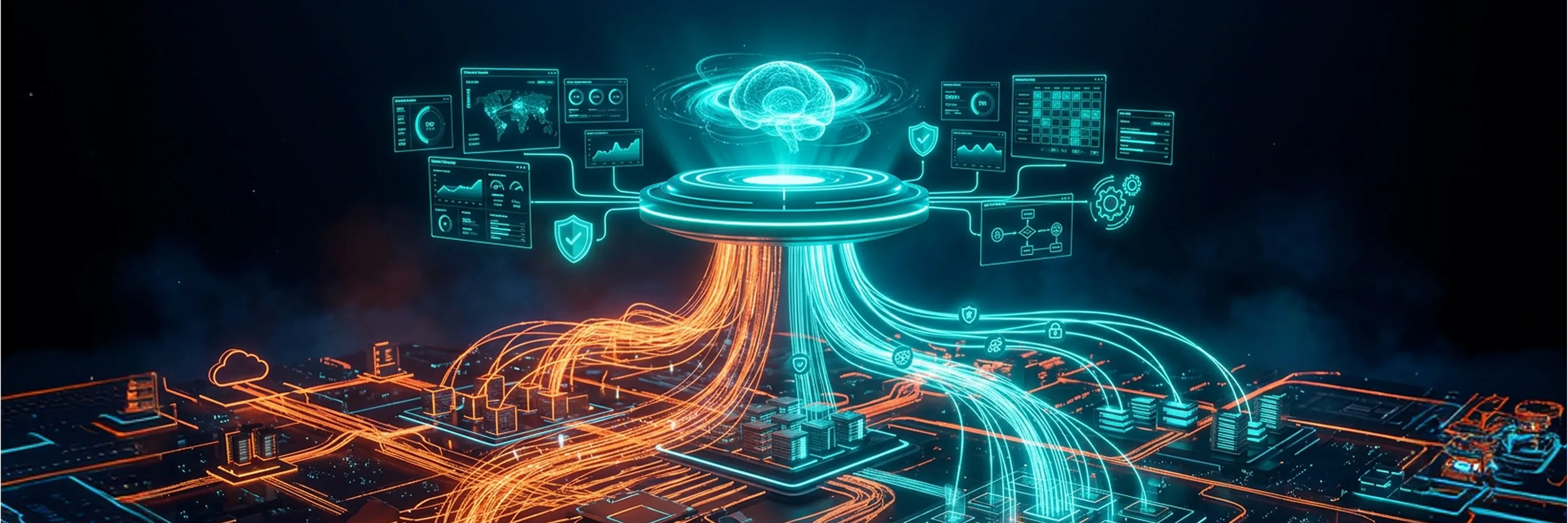
futuristic AI system visual showing a central brain-like processor distributing data streams across interconnected digital infrastructure and analytics dashboards

Why Businesses Worldwide Are Switching to Managed Cloud

Cloud costs keep rising. Incidents take longer to resolve. Compliance requirements multiply. And internal teams are stretched thinner every year. For many organizations, the infrastructure is in the cloud - but the operations have not caught up. That gap is why managed cloud is becoming the default model for businesses that need to run cloud well, not just use it.