A glowing neon 3D lock inside a transparent cube sits on a circuit board, symbolizing secure data protection and cybersecurity

The Shield That Never Sleeps: Why Managed Security Services Are Your Best Defense

Cyber threats don’t sleep - and if your security does, you’re already exposed. One missed patch, one late alert, and your entire operation can grind to a halt. Here’s why Managed Security Services are now the shield your business can’t run without.

Content authorBy Irina BaghdyanPublished onReading time7 min read

Overview

Modern businesses aren’t just defending their networks anymore - they’re defending their ability to operate. With AI-driven attacks, fragmented environments, and constant pressure on IT teams, companies are shifting from isolated tools to integrated Managed Security Services that turn their entire infrastructure into a unified, always-on defense system. This section explains why that shift is happening and what it means for long-term resilience.

Transforming IT From a Target Into a Fortress

Today’s systems are moving targets - every new device or app opens another door. And with AI-driven attacks finding weaknesses in seconds, even a small gap is enough to take you down. That’s why businesses are shifting to integrated Managed Security Services: a unified fortress where IT and security defend together, not alone.

  • Sophisticated Threats: Attackers now use automated tools to scan thousands of networks simultaneously.
  • Integrated Defense: Security layers are built directly into network management, closing gaps between operations and protection.
  • Market Growth: The need for advanced defense is clear, with the global endpoint protection platform market valued at $17.59 billion in 2024.

By treating your IT infrastructure as a fortress rather than a utility, you establish a baseline of security that discourages opportunistic attackers. If you're looking to strengthen your IT environment, see how a unified approach can make a difference in Cloud Managed Security: Unified Security Strategy for Cloud and Hybrid Enviroinments.

The High Cost of Doing It Alone

Building an in-house cybersecurity team is expensive and unrealistic for most SMBs. You don’t just need one IT person - you need specialists in network security, compliance, threat analysis, and incident response, all of whom are hard to hire and even harder to retain in a competitive market.

Hiring a full internal cybersecurity team requires specialists across multiple domains:

  • SOC analysts for monitoring
  • Cloud security engineers for AWS/Azure/GCP
  • Security architects for designing policies and segmentation
  • Compliance officers for GDPR, HIPAA, ISO 27001
  • Incident responders for high-severity events

Even a minimal team to cover 24/7 monitoring can cost €450,000–€750,000 annually, not including turnover, training, or licensing.

Recent data supports this trend. A 2025 report from Barracuda Networks reveals that 85% of organizations with 1,000–2,000 employees rely on MSPs for security support. This demonstrates that even larger entities see the value in external expertise over attempting to handle everything in-house.

For guidance on choosing an MSP that contributes to business growth and operational stability, read How Managed IT Services Empower Business Growth.

Continuous Monitoring Over Reactive Fixing

The old break-fix model no longer works. By the time an alert appears, attackers may have already moved laterally or escalated access. Managed Security Services replace this with continuous monitoring that catches early indicators of compromise before they turn into full incidents - detecting anomalies the moment they surface.

  • Early Detection: Identifying a threat when it is a minor blip saves significant time and money compared to a full-scale remediation.
  • Managed SOC: A Managed Security Operations Center (SOC) provides a centralized team that analyzes traffic and alerts in real time.
  • Endpoint Protection: Every device connected to your network is monitored to prevent malware from spreading.

Mini Case Study: A regional bank utilized a managed SOC to detect unusual login attempts from a foreign country at 2 AM. The system automatically flagged and blocked the access attempt before any data could be exfiltrated, preventing a potential financial and reputational crisis.

For an in-depth look at the risks of disjointed IT and why continuous monitoring is essential, check out The Danger of the Franken-Stack: How Patchwork IT Blocks Growth - And How Technology Business Solutions Fix It.

Demand is exploding. MDR is skyrocketing from $1.89B to $8.34B by 2032 - and nearly half of all companies are ready to drop their provider if they don’t see real 24/7 protection.

In short, continuous monitoring provides:

  • early threat detection
  • reduced MTTD/MTTR
  • endpoint and network visibility
  • real-time SOC response

Patch Management and Compliance Assurance
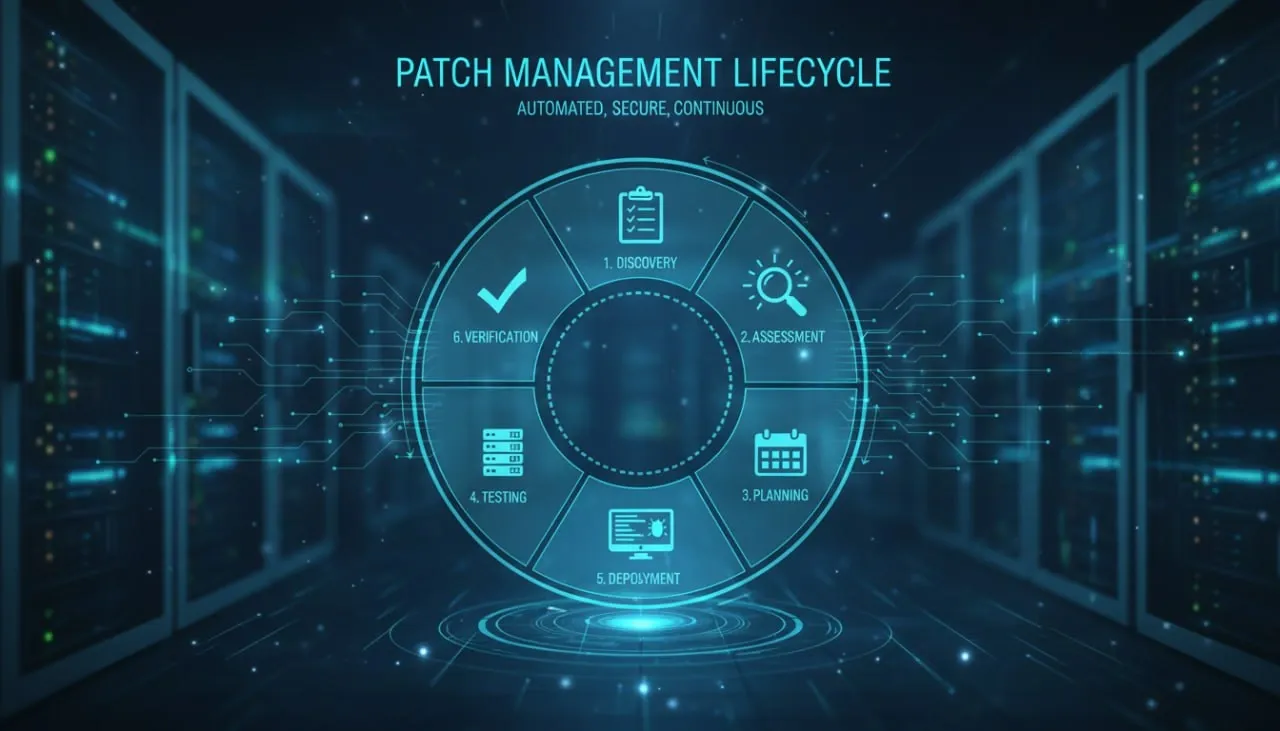
Diagram showing the automated patch management lifecycle with discovery, assessment, planning, testing, deployment, and verification steps.Patching is not just maintenance - it is a compliance requirement across major frameworks:

  • ISO 27001 requires timely vulnerability remediation.
  • NIST 800-53 mandates patching “without unreasonable delay.”
  • GDPR considers failure to update systems as negligent, increasing penalty risks.

When patches are missed, attackers exploit known vulnerabilities within days (sometimes hours). Managed Security Services ensure:

  • Automated prioritization based on severity (CVSS scores)
  • Scheduled rollouts to avoid business disruption
  • Full logging for compliance audits
  • Reporting dashboards for proof of adherence

This reduces both breach risk and regulatory exposure. For more on integrating regular patching and compliance into your IT fabric, explore Cloud Support: How Managed DevOps and Cloud Support Keep You Online 24/7

Compliance is not just about avoiding fines; it is about maintaining trust. With 45% of SMBs preferring bundled endpoint, network, and email security solutions, it is clear that businesses want a unified approach that handles the messy details of compliance for them.

When the Shield Takes a Hit: Disaster Recovery

Even the most robust defenses can sometimes be breached. A sophisticated phishing attack or a zero-day vulnerability might slip through. In these moments, the true value of a managed service partner is revealed through disaster recovery. It is not just about blocking the punch; it is about how quickly you can get back on your feet.

A solid disaster recovery plan minimizes downtime and ensures business continuity.

  • Immediate Response: Protocols are executed instantly to contain the threat and limit damage.
  • Data Restoration: Backups are verified regularly so that clean data can be restored quickly.
  • Business Continuity: Operations can often switch to failover systems, keeping the business running while the primary issue is resolved.

Mini Case Study: A manufacturing firm was hit by ransomware that locked their production files. Because their MSP had a disaster recovery plan with immutable backups, they restored their systems within four hours, avoiding the ransom payment and weeks of lost production.

Resilience is a key component of modern security. Knowing that a team of experts is ready to execute a recovery plan provides peace of mind. A good place to learn how integrated backup and recovery support round-the-clock operations is Top 5 Cloud Business Services That Transform SMBs.

A leading provider of managed IT services ensures that even in a worst-case scenario, your business has a roadmap to recovery that is practiced, tested, and ready to go.

What Are Managed Security Services?

Managed Security Services mean handing over your IT security and day-to-day tech operations to a team of specialists. Instead of waiting for something to break, they work to stop problems before they start - watching your systems in real time, closing risks, and keeping everything updated. In one package, you get device protection, network management, patching, and a managed SOC that monitors your environment around the clock. This keeps your business safe, compliant, and running smoothly 24/7 without the cost of hiring a full internal security team.

Conclusion

The digital landscape isn’t getting any safer - but the businesses that prepare are the ones that thrive. Managed Security Services give you a constant layer of protection, catching issues before they become problems and keeping your systems compliant and resilient. It’s not just an IT decision; it’s a smart move that frees your team to focus on what actually drives growth. With most MSPs investing heavily in security, choosing the right partner today means staying ahead of tomorrow’s threats.


An MSP (Managed Service Provider) typically focuses on network performance, IT support, and keeping systems operational. An MSSP (Managed Security Service Provider) specializes specifically in cybersecurity, offering services like threat monitoring and incident response. Today, many providers offer a hybrid model, delivering secure managed services that cover both operational efficiency and advanced security.

Endpoint protection secures the entry points of your network, such as laptops, desktops, and mobile devices. Since these devices are often the targets of phishing and malware attacks, securing them is essential to prevent threats from spreading to your central servers and sensitive data. The global market for these platforms was valued at $17.59 billion in 2024, reflecting their critical role in modern defense.

A managed SOC (Security Operations Center) provides a dedicated team of analysts who monitor your network traffic and security alerts 24/7. They use advanced tools to detect and analyze potential threats in real time. This continuous oversight allows them to identify and neutralize sophisticated attacks that automated software might miss.

Yes, managed services are vital for maintaining compliance with regulations like GDPR, HIPAA, or PCI-DSS. Providers implement rigorous patch management, data encryption, and access controls. They also generate detailed reports and logs that serve as proof of due diligence during audits, helping you avoid costly fines and legal issues.

They detect issues early, block threats fast, apply updates on time, and restore systems quickly - keeping your business running without interruptions.

Schedule a Meeting

Book a time that works best for you and let's discuss your project needs.

You Might Also Like

Discover more insights and articles

Abstract visualization of interconnected data streams representing digital marketing automation, data integration, and performance-driven decision systems

Why Outsourcing Your DevOps Platform is 2026’s Smartest OpEx Move: managed it services and support

Leading CFOs have a new line item keeping them up at night: the spiraling cost of in-house DevOps. Salaries keep climbing, outages remain unforgiving, and security demands never sleep. The question is no longer “do we need DevOps?” but “do we still need to build it ourselves?”

This article walks through the facts, the math, and the risk calculus behind the Build-vs-Buy decision, showing why a managed DevOps model delivers nonstop expertise, lower exposure, and smoother cash flow for less than one senior engineer’s payroll.

The image depicts an advanced enterprise AI chip embedded in a digital circuit board, visualizing neural network processing and high-performance computing architecture

Cyber-Resilience: Why 2026 Boards are Trading Protection for Immunity

Modern boards are staring at a blunt truth: threat actors now move faster than any human response plan. A single ransomware strike can wipe decades of data, paralyze revenue, and sink market value overnight. Buying more perimeter tools will not calm the boardroom. Ensuring the business never stops will.

Below is a practical roadmap for CISOs, IT Directors, and Business Continuity Managers who need to move their IT and business services from brittle protection to digital immunity before the next quarterly review.

The image shows a high-performance AI processor chip on a circuit board with flowing data streams, representing neural computing and modern enterprise IT architecture

The Sovereignty Shift: Navigating Data Residency and Corp IT Solutions in a Borderless Cloud

In 2026, the question is no longer just whether your data is in the cloud, but exactly which legal jurisdiction that cloud inhabits. For Chief Information Officers and Risk Officers, particularly in regions like the Gulf Cooperation Council (GCC) and Canada, the physical location of a server now carries as much weight as its uptime or security.

This article examines the critical transition from general public cloud strategies to the era of the Sovereign Cloud. We will explore how mid-market firms and large enterprises can navigate strict data laws in Saudi Arabia, the UAE, and beyond. You will learn how to design hybrid architectures that keep sensitive information within national borders while still leveraging global innovation, ensuring yourdigital enterpriseremains compliant and competitive.

Futuristic digital network illustration showing cloud infrastructure with glowing data flows, interconnected circuits, and real-time processing across a modern IT system

How to Build a Cloud Services Support Model That Scales

Cloud leaders love the flexibility of the public cloud, yet many still struggle to support thousands of fast-changing workloads without hiring armies of engineers. By 2026, operational excellence will be judged by a single metric: the Engineer-to-Instance ratio. The lower the ratio, the more resilient the platform—and the more strategic the IT budget.

Below is a practical, end-to-end playbook for CTOs, CIOs, and FinOps leaders who want a cloud services support operation that grows automatically with the business instead of linearly with headcount.