Digital overlay reading “Managed IT” on glass office walls, symbolizing secure cloud and IT management.

How Managed IT Services Empower Business Growth

Many businesses still handle IT tasks alone, causing downtime and missed growth. Partnering with a managed services provider (MSP) cuts risk, boosts focus, and drives faster scaling.

Content authorBy Irina BaghdyanPublished onReading time5 min read

Overview

We begin with a clear definition of Managed IT Services and how they differ from traditional IT outsourcing. The article then highlights key business benefits, explains SLAs, and presents ROI examples backed by market data. Finally, it offers a checklist for choosing the right partner, showing how Managed IT Services drive business scalability, customer satisfaction, and digital transformation.

What Are Managed IT Services?

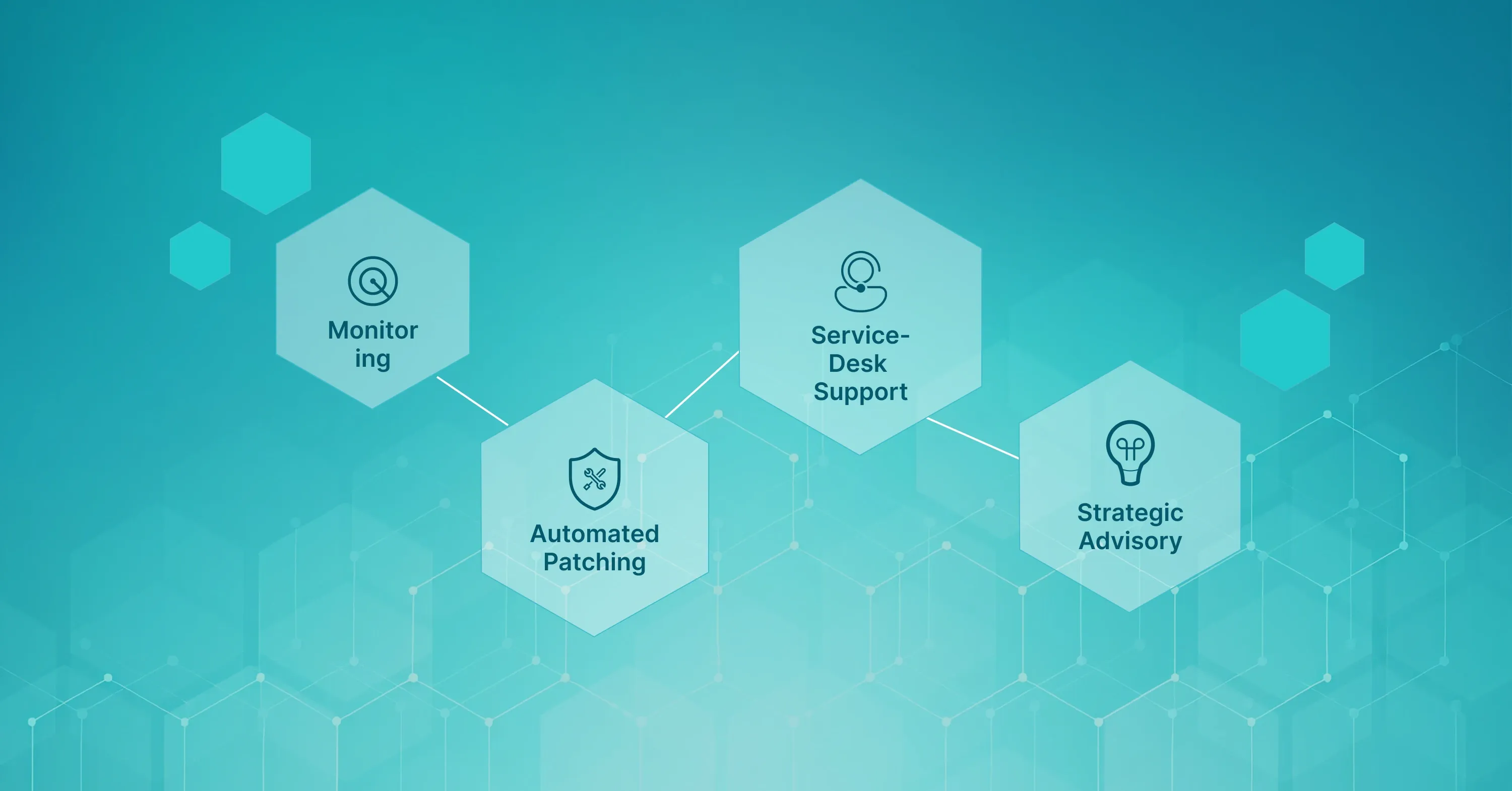
A digital infographic displays four connected hexagons labeled Monitoring, Automated Patching, Help-Desk Support, and Strategic Advisory, representing core IT service pillars.

Managed IT services combine remote monitoring, maintenance, and support into a flat monthly plan. An MSP becomes an extension of your team, handling everything from network health to SaaS solutions so your staff can focus on core goals.

  • Monitoring tools watch servers, laptops, and cloud resources 24/7
  • Automated patching reduces vulnerabilities before they are exploited
  • Service Desk technicians resolve user issues quickly, often within minutes
  • Strategic advisors plan upgrades, migrations, and security roadmaps

Unlike traditional hourly-based IT outsourcing, modern subscription-based Managed IT Services emphasise proactive monitoring and continuous improvement, delivering fewer emergencies and more predictable costs.

Key Benefits for Business Growth

Reliable infrastructure is no longer a luxury, it is the backbone of modern commerce. Below are the most cited benefits executives see after switching to managed services.

1. Predictable Spending

Predictable Spending - A fixed-fee model replaces unpredictable repair bills. Maintenance, security and user support are consolidated into one monthly cost - simplifying budgeting and transforming capital expenditures into operational expenses.

2. Reduced Downtime

Reduced Downtime - With proactive monitoring and maintenance, many issues are resolved before they impact operations. This significantly reduces productivity losses and mitigates risk of serious business interruption.

3. Stronger Cybersecurity

Stronger Cybersecurity - Managed service providers implement layered security measures - endpoint protection, threat intelligence, continuous monitoring- which enhances your defensive posture and helps ensure compliance.

4. Faster Digital Transformation

Faster Digital Transformation - Migrating to cloud services and modernising infrastructure is accelerated with experienced partners - reducing complexity, training burdens and time-to-value.

5. Access to Specialized Talent

Access to Specialist Talent - Outsourcing IT operations gives you access to certified experts and advanced capabilities without the full-time hiring burden - enabling high-value projects and strategic initiatives.

6. Focus on Core Competencies

Focus on Core Competencies - With routine IT managed externally, your internal teams can focus on innovation, customer experience and revenue-driving activities- rather than maintenance and support.

Service Level Agreements: Setting Clear Expectations

An SLA defines the scope, response times, and performance metrics you can hold your MSP to. Getting this document right avoids frustration later.

  • Response Time: How quickly the service desk acknowledges an issue
  • Resolution Time: Typical window to close tickets by severity level
  • Uptime Guarantees: Target availability for networks, servers, or cloud apps
  • Reporting Cadence: Monthly or quarterly health overviews
  • Exit Clauses: Notice periods and data hand-back procedures

Crafting a Practical SLA

Start with the business outcome, then choose metrics that support it. For a retail chain, point-of-sale uptime may outweigh everything else. For a law firm, secure email archiving could top the list.

A well-written SLA is a living document. Review at least annually to align with evolving needs, regulatory changes, and new digital transformation goals.

If you're seeking structured guidance on requirements and available solutions, check out our detailed Services overview.

Real-World ROI: Numbers That Matter

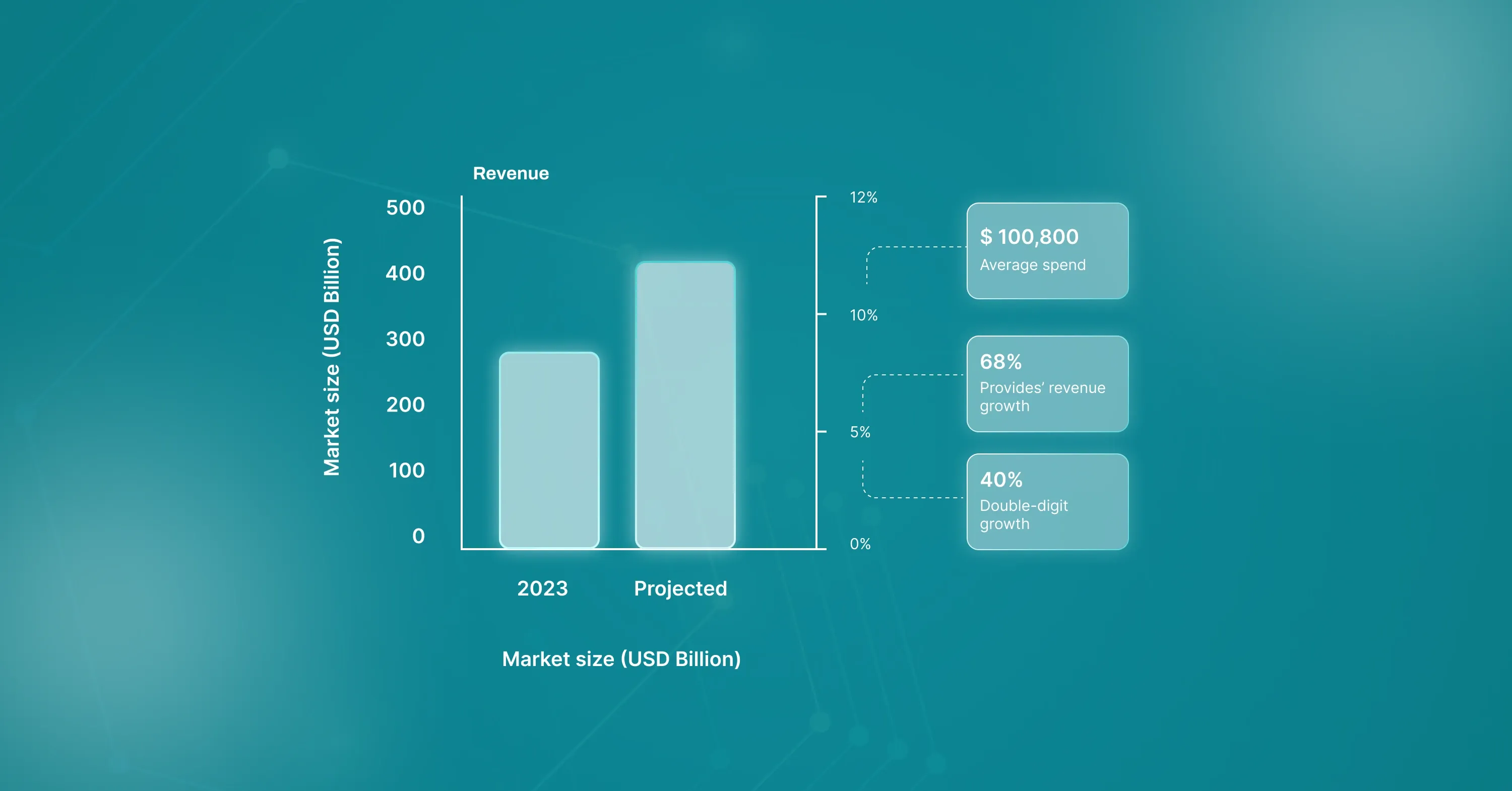
A teal-themed bar chart compares 2023 and projected market sizes in USD billions, highlighting average spend, revenue growth, and double-digit growth statistics

The global managed services market reached $299.01 billion in 2023 and is set to grow at a 13.6 % CAGR through 2030, according to the same 2025 survey. Why are budgets flowing toward MSPs?

  • MSP clients in North America spend an average of $110,800 each year
  • 68% of providers increased revenue in 2024, proving strong demand
  • Almost 40 % of firms achieved double-digit growth by adding managed detection and response (MDR) services

Sample Payback Scenario

A 200-employee manufacturing company moved to a managed model:

  • Replaced legacy servers with cloud business services, saving $42,000 in hardware refresh costs.
  • Cut unplanned downtime by 40 hours per year, valued at $28,000 in labor and production time.
  • Consolidated software licensing, trimming 15 % off SaaS spend, or $9,600.

The MSP contract cost around $6,500 per month in the North American market (rates may vary across regions). With the right provider and proactive contract model, a manufacturing company can achieve a first-year ROI exceeding 140%, thanks to reduced downtime and operational disruptions. These numbers repeat across industries, making a compelling case for managed services.

Choosing a Managed IT Services Partner

Selecting the right provider can feel overwhelming, yet a structured process keeps things clear.

  • Define your business goals: growth targets, compliance needs, or customer experience improvements
  • Map existing infrastructure: wireless, servers, SaaS solutions, and remote worker support
  • Evaluate cultural fit: communication style, documentation quality, and escalation paths
  • Check references: ask peers about uptime, billing accuracy, and problem resolution speed
  • Review security posture: certifications, incident response plans, and insurance coverage

ABS Technologies delivers infrastructure management, cloud computing and cybersecurity in one package, enabling seamless scaling from on-premises to hybrid cloud. A well-matched partner becomes an ally - not just a vendor. Our Business Technology Services connect core IT functions across regions and specialties.

Conclusion

Managed IT Services free businesses from daily system upkeep, turning unpredictable expenses into a stable monthly cost and unlocking room for innovation. With clear SLAs, measurable ROI, and a trusted partner like ABS Technologies, adopting Managed IT Services becomes seamless - paving the way for scalable growth and long-term success.

Traditional outsourcing often covers single projects or break-fix tasks billed hourly. Managed IT services bundle monitoring, maintenance, and support into a recurring plan with clear performance metrics and faster response times.

No. Small and midsize businesses benefit even more because they gain enterprise-grade tools and expertise without hiring full-time specialists, making budgets predictable.

Key items are response and resolution times, uptime guarantees, security responsibilities, reporting frequency, and exit terms to ensure data hand-back.

Many organizations notice fewer outages within the first month and recover the entire annual fee through reduced downtime and deferred hardware costs inside the first year.

Break-Fix or traditional IT support reacts to issues as they occur - you call for help and pay per incident or project. Managed IT Services, on the other hand, work proactively under a subscription model, providing continuous monitoring, maintenance, and security to prevent downtime and stabilize IT costs.

Schedule a Meeting

Book a time that works best for you and let's discuss your project needs.

You Might Also Like

Discover more insights and articles

The image depicts an advanced enterprise AI chip embedded in a digital circuit board, visualizing neural network processing and high-performance computing architecture

Cyber-Resilience: Why 2026 Boards are Trading Protection for Immunity

Modern boards are staring at a blunt truth: threat actors now move faster than any human response plan. A single ransomware strike can wipe decades of data, paralyze revenue, and sink market value overnight. Buying more perimeter tools will not calm the boardroom. Ensuring the business never stops will.

Below is a practical roadmap for CISOs, IT Directors, and Business Continuity Managers who need to move their IT and business services from brittle protection to digital immunity before the next quarterly review.

The image shows a high-performance AI processor chip on a circuit board with flowing data streams, representing neural computing and modern enterprise IT architecture

The Sovereignty Shift: Navigating Data Residency and Corp IT Solutions in a Borderless Cloud

In 2026, the question is no longer just whether your data is in the cloud, but exactly which legal jurisdiction that cloud inhabits. For Chief Information Officers and Risk Officers, particularly in regions like the Gulf Cooperation Council (GCC) and Canada, the physical location of a server now carries as much weight as its uptime or security.

This article examines the critical transition from general public cloud strategies to the era of the Sovereign Cloud. We will explore how mid-market firms and large enterprises can navigate strict data laws in Saudi Arabia, the UAE, and beyond. You will learn how to design hybrid architectures that keep sensitive information within national borders while still leveraging global innovation, ensuring yourdigital enterpriseremains compliant and competitive.

Futuristic digital network illustration showing cloud infrastructure with glowing data flows, interconnected circuits, and real-time processing across a modern IT system

How to Build a Cloud Services Support Model That Scales

Cloud leaders love the flexibility of the public cloud, yet many still struggle to support thousands of fast-changing workloads without hiring armies of engineers. By 2026, operational excellence will be judged by a single metric: the Engineer-to-Instance ratio. The lower the ratio, the more resilient the platform—and the more strategic the IT budget.

Below is a practical, end-to-end playbook for CTOs, CIOs, and FinOps leaders who want a cloud services support operation that grows automatically with the business instead of linearly with headcount.

Futuristic cloud security and compliance dashboard visualizing FinOps and GreenOps metrics, cost optimization, and energy-efficient cloud infrastructure

The Green Cloud: Why Carbon-Aware DevOps is the Secret to 2026 Compliance

New EU and US climate rules are about to turn every container image, lambda call, and SQL query into an auditable emission line item. Platform teams must now prove that the way they build and run software is affordable and planet-friendly, or risk fines and reputational damage.

This article explains how carbon-aware DevOps connects cloud cost management (FinOps) with environmental accountability (GreenOps), why the two goals are inseparable, and what engineers need to change before the 2026 reporting deadlines arrive.