Overview
A data breach doesn’t just cost money - it destroys brand equity. Customers leave companies they can’t trust, and once that trust fractures, even flawless technical recovery can’t win them back. Trust takes years to build and seconds to lose - and in cybersecurity, those seconds are brutal. As breaches grow more costly and customer expectations skyrocket, secure information technologies are no longer just IT infrastructure; they’re the foundation of brand credibility. This article breaks down how smart companies defend their reputation, protect their revenue, and win deals through stronger frameworks, smarter encryption, and transparent trust signals.
How Secure IT Strategies Build Business Trust
Strong security isn’t just protection - it’s proof. When companies show that their controls are real and transparent, customers feel confident their data is safe. Trust grows through:
- Audited Controls: Verified, measurable security practices.
- Modern Encryption: Up-to-date protection for data in motion and at rest.
- Transparent Policies: Clear communication about how data is handled.
- Low-Risk Positioning: A mature security posture reassures enterprise buyers.
When customers trust your security, sales move faster, churn drops, and your brand becomes the safer choice.
The True Cost of a Data Breach Beyond the Balance Sheet
We tend to focus on fines and legal costs after a cyber incident, but the real damage is reputational. One breach can flip your brand story from “innovative” to “untrustworthy” overnight. With the average breach now costing USD 4.88 million, the true price isn’t just money - it’s lost customers, stalled deals, and a credibility hit that takes years to repair.
- Customer Churn: Clients often defect to competitors they perceive as safer immediately following a publicized leak.
- Operational Downtime: Systems may remain offline for days or weeks, halting revenue generation completely.
- Investor Hesitation: Stock prices frequently drop, and venture capital becomes harder to secure when risk management is questioned.
Recovering from a breach involves more than patching a server; it requires rebuilding the public's belief in your competence. A security-first mindset ensures that trust remains intact, protecting the company's future revenue streams.
For organizations looking to transform their approach to security investments and outcomes, Why Security as a Service Is the Future of Cyber Defense explains why focusing on resilience metrics, managed threat detection, and outcome-based security models is overtaking traditional stack spending.
Real-World Example: The Retailer’s Redemption
A mid-sized e-commerce retailer suffered a breach that exposed 50,000 credit card numbers. Sales dropped 40% in the following quarter, not due to technical outages, but because customers refused to enter their payment details on the site. To survive, the company rebranded its checkout process, highlighting new, visible security partnerships and insurance guarantees. It took two years to return to pre-breach revenue levels, illustrating that the technical fix was quick, but the reputational repair was grueling.
Strengthening Foundations with ISO 27001 Compliance

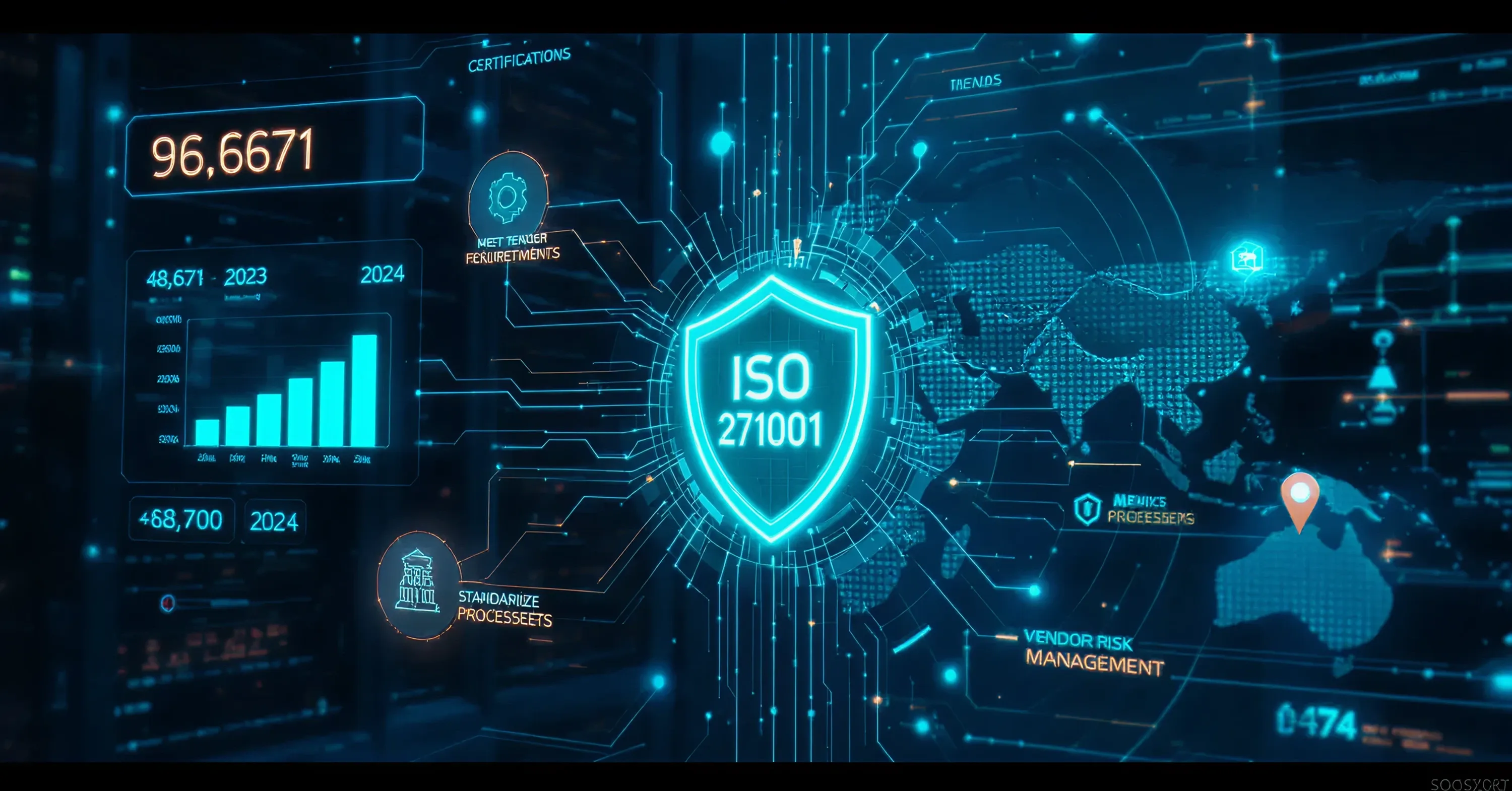
Saying you take security seriously isn’t enough - you need proof. That’s why ISO 27001 has become the global gold standard, showing partners and clients that your defenses are real, audited, and reliable. And the world is catching on fast: ISO 27001 certifications nearly doubled from 48,671 in 2023 to 96,709 in 2024, making it clear that security frameworks are no longer a “nice to have” but a competitive requirement.
- Standardize Processes: Create a consistent playbook for handling data across all departments.
- Meet Tender Requirements: Many government and enterprise contracts now disqualify bidders who lack certification.
- Manage Vendor Risk: Ensure that third-party suppliers meet the same high bar for safety.
The landscape is competitive, and regions are racing to establish dominance in secure infrastructure. For instance, China led all countries with 33,359 ISO/IEC 27001 certificates in 2024, reflecting a massive national investment in verifiable security.
Achieving compliance transforms security from a vague concept into a measurable business asset. It tells the market that your organization is disciplined, audited, and ready to handle sensitive information responsibly.
Modernizing Defense with Advanced Encryption Standards
Your data is most vulnerable when you think it’s safe. The moment it moves - or even when it sits still - it can be exposed. And outdated encryption won’t stop modern attackers, let alone the coming wave of quantum threats. With North America leading 45% of the encryption market, regulators are pushing companies to upgrade now, before their defenses quietly expire.
For organizations seeking to unify their cloud and hybrid encryption and audit controls, see Cloud Managed Security: Unified Security Strategy for Cloud and Hybrid Enviroinments for insight on how centralized detection, key management, and backup strategies ensure compliance and resilience.
A top managed IT services partner gives you advanced encryption without the cost of building it yourself. Updating these protocols shows customers you’re thinking ahead - protecting their data from today’s threats and tomorrow’s more powerful attacks.
Real-World Example: The Healthcare Network
A regional hospital network realized their patient records were encrypted with outdated keys that could be easily compromised by modern brute-force attacks. They initiated a migration to quantum-resistant algorithms for their archive servers. This move was highlighted in their annual patient newsletter, reinforcing their commitment to privacy. The upgrade prevented a potential disaster when a ransomware gang attempted to exfiltrate data but found the files unreadable and useless for extortion.
Empowering the Human Firewall Through Training
Even the best security tech fails if one employee clicks the wrong link - attackers count on it. Real protection comes from a culture where people feel empowered to spot threats, not just lectured once a year. With ongoing, role-specific training, employees become active defenders instead of hidden vulnerabilities.
- Phishing Simulations: Sending harmless "fake" phishing emails to test and educate employees on spotting red flags.
- Role-Based Scenarios: tailoring lessons for finance teams (wire transfer fraud) versus HR teams (resume malware).
- Clear Reporting Channels: Making it easy and penalty-free for employees to report suspicious activity immediately.
A well-trained workforce significantly reduces the risk of accidental breaches. It creates an environment where security is everyone's job, safeguarding the brand from the inside out.
For more guidance on proactive security strategies, continuous monitoring, and predictable cloud maintenance - including strategies to mitigate risks from human error - visit the comprehensive Information Security resource.
Leveraging Trust Signals to Win Business
Once your defenses are in place, you need to make them visible. Clear trust signals show prospects you’re the safer choice and can tip the scales in your favor. Highlighting your security upfront builds confidence and speeds up the sales cycle.
Key trust signals include:
- Public Trust Centers: A dedicated webpage detailing your compliance status, uptime, and sub-processor policies.
- Security Badges: Displaying logos for ISO 27001, SOC 2, or GDPR compliance on footers and checkout pages.
- Customer-Facing Documentation: offering downloadable security whitepapers or "standard response" packages for procurement teams.
For a deeper look at how a unified IT backbone and modern endpoint protection can enhance your brand’s trust signals and security posture, read The Danger of the 'Franken-Stack': Why Patchwork IT Will Kill Your Growth and How to Build a Secure, Scalable Foundation.
Real-World Example: The SaaS Sales Cycle
A cloud storage startup noticed their sales team was getting bogged down in weeks of security questionnaires from potential clients. They decided to build a public "Trust Center" on their website, hosting their ISO certificates, penetration test summaries, and privacy policies. This allowed prospects to self-serve the due diligence information they needed. The result was a 30% reduction in the length of their sales cycle, as trust was established before the first sales call occurred.
What Are Secure Information Technologies?
Secure information technologies encompass the complete ecosystem of hardware, software, policies, and practices designed to protect data integrity, confidentiality, and availability. This includes technical tools like firewalls, endpoint detection, and advanced encryption, as well as governance frameworks like ISO 27001 and human-centric strategies such as security awareness training. Together, these elements form a cohesive defense that safeguards digital assets from unauthorized access and cyber threats.
To see how these principles drive tangible business outcomes and empower scalable, resilient organizations, explore How Managed IT Services Empower Business Growth.
Conclusion
Trust is the ultimate currency in modern business, and secure information technologies are the vault that protects it. By moving beyond basic compliance and embracing rigorous frameworks like ISO 27001, adopting next-generation encryption standards, and fostering a culture of employee awareness, organizations can protect themselves against reputational ruin. Security is no longer just a cost center; it is a strategic asset that signals reliability, attracts premium clients, and ensures sustainable growth in a digital world.